
It fell to Dr. Thomas E. Lyons, an American citizen and specialist in foreign trade zones, by order of then-President of the Republic Enrique Jimenez, to carry out a feasibility study in our country to build a free zone. Knowing the importance of the geographical position of the city of Colon and the Ports adjacent to this city, Dr. Lyons stated in his studies that the city of Colon is the appropriate site for the much-desired Free Zone. The President of the Republic issued Decree Law No. 18 of June 1948, which created the Colon Free Zone as an autonomous institution of the Panamanian state, which would have its own legal personality, but subject to the inspection and surveillance of the Presidency of the Republic and the Comptroller General.
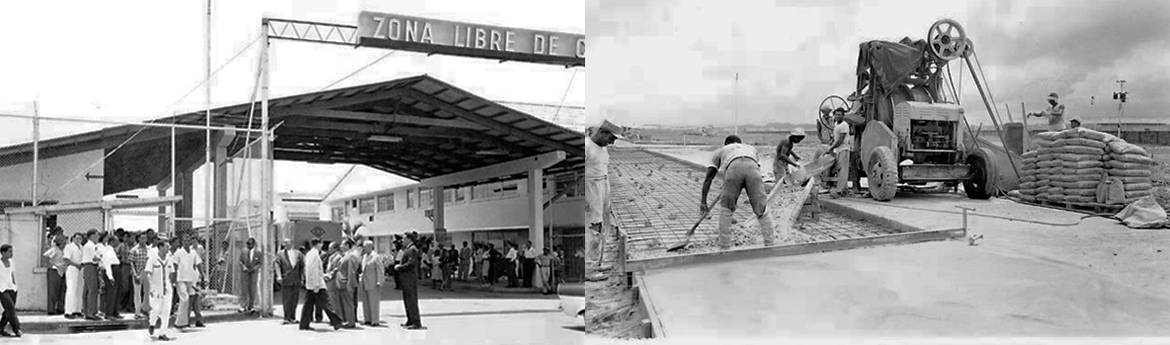
First board of directors
The first board of directors of the Colon Free Zone was established on July 1, 1948, constituted as follows:
- Agustin Cedeño President
- Manuel Castillo Secretary
- Herbert Toledano Treasurer
- Roberto Einsenmann Member
- George Bennet Member
- Galileo Solis Advisor

Genesis of the Colon Free Zone
It should be noted that this Free Trade Zone began its operations on 5th Street in the Arboix building and later moved to the Portobelo building in Cuatro Potencias on 12th Street and Melendez Ave. As soon as it became the law of the nation, the Free Zone started operations with ten companies and thirty-five hectares; today we have more than three thousand companies and one thousand sixty-five hectares.
One of the most important projects of the fiscal year is the construction of the International Passenger and Cargo Airport, for which we have allocated more than 270 hectares and will proudly bear the name of President Enrique A. Jimenez. The first Manager was Mr. Silvio Salazar, whose appointment became effective on December 2, 1950. Unfortunately, Mr. Salazar resigned, and Mr. Mario de Diego was appointed in his place on June 22, 1951.
Since its inception, the Colon Free Zone has played an important role in the country’s economy, as it is one of the state institutions that contributes the most to the country’s gross domestic product.
We want to highlight that the Colon Chamber of Commerce was one of the fundamental pillars in achieving this segregated zone that has generated so many benefits for the country, primarily for the province of Colon; creating jobs and economic benefits for all Panamanians. Among some of the companies that were established at the beginning of the Colon Free Zone, we can list the following: Gillette Export, Coca Cola Export Corp., Pfizer Int, Parke Davis Inc, and others.