
🇭🇹 How to import from Panama to Haiti?

Haitians who wish to buy tax-free products from the Panama Free Zone have three main methods at their disposal. The first is to make online purchases through Bridgemarkets Marketplace, a platform that offers a variety of products and handles the shipping logistics to Haiti. As a second alternative, you can buy directly from the websites of Panamanian stores, using the Official Directory of the Free Zone, which classifies wholesale merchants by product category and provides detailed information for wholesale purchases, including the appropriate choice of a logistics company for shipping by sea or air.

The third option is to travel personally to Panama to make purchases in the showrooms in Colon. It is suggested to plan this visit with the help of DIZOLICOL to identify the stores that offer the specific products of interest. Given the large extent of the Colon Free Zone, the largest in America and the second largest in the world, meticulous planning is crucial to make the most of the available time. After the purchases, it is necessary for the buyer to coordinate the transport of the products to Haiti with a logistics company.
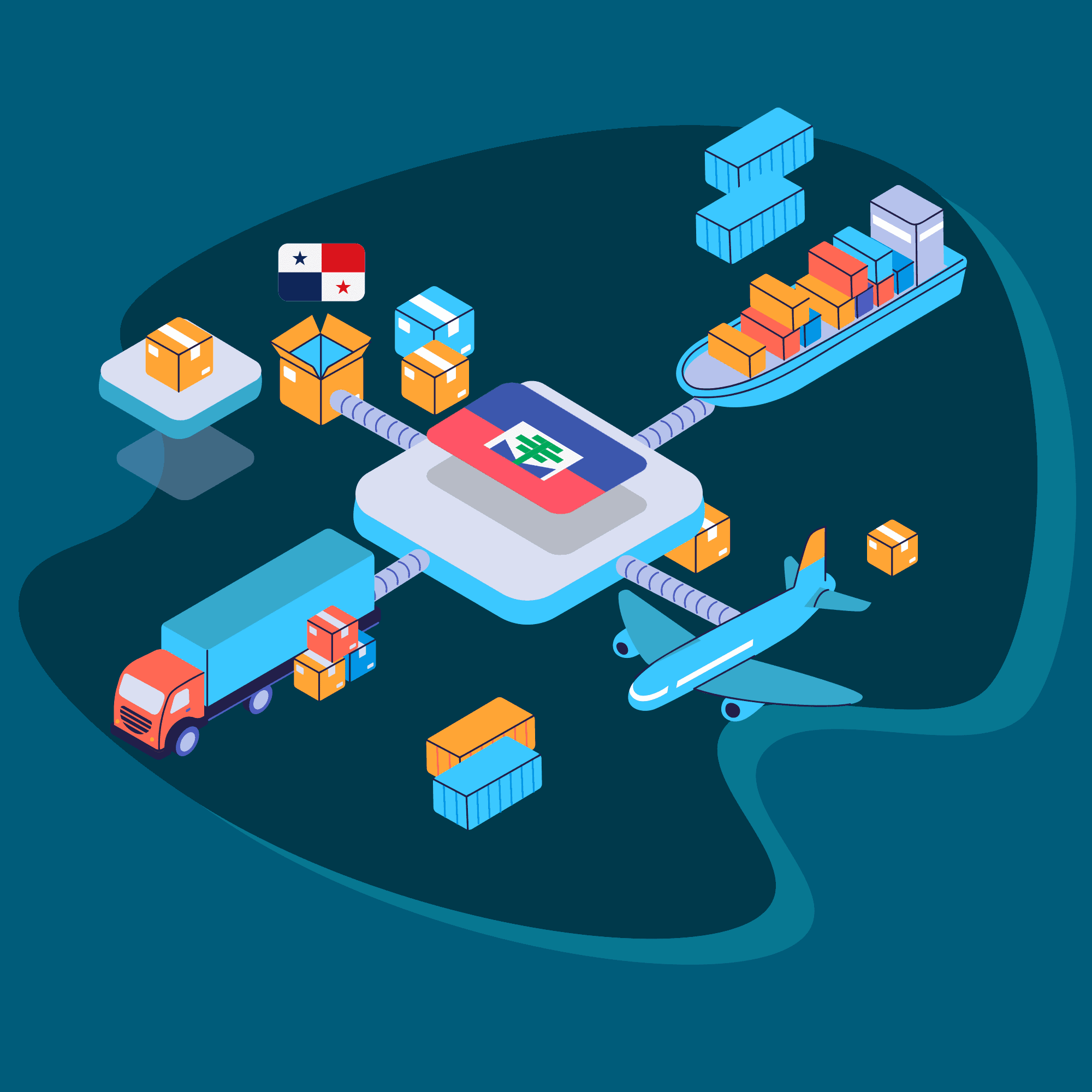
Importar desde la Zona Libre de Colón en Panamá hasta Haití

📦What products can be imported from Panama to Haiti?

Panama has established itself as a key point in Latin American wholesale trade, standing out for its variety of products, including international brands. Its efficiency in the management and delivery of merchandise positions it favorably against markets like China, which, although offering more competitive prices, sometimes lacks in product availability and quality. Regarding trade relations with Haiti, these have gained relevance recently. Haiti has imported Panamanian products worth nearly 116 million dollars annually according to UN COMTRADE data, demonstrating a strong commercial connection between both countries.

As for the products that Haiti can import, what Haitian businessmen acquire the most in the Panama free zone:

  • ✅ Beauty and Perfumes
  • ✅ Sunglasses
  • ✅ Shoes
  • ✅ Technology
  • ✅ Food
  • ✅ Jewelry
  • ✅ Textiles and Clothing
  • ✅ Furniture

Agriculture

Manufacturing Articles

Musical Instruments

Jewelry & Watches

Medicine

General Merchandise

Office & School

Industrial Products

Security

📄What are the requirements to import merchandise into Haiti?

Before starting with what I need to import to Haiti, it is crucial first to establish under which legal entity (whether as a Company, Natural Person, or Mercantile Society) the documents will be presented at Haiti Customs. In addition, you can consider the option of employing the services of a certified Customs Broker by the General Directorate of Customs of Haiti, who can act as a representative in all procedures with the General Directorate of Customs Services. The initial step in importing involves registration with the different government agencies that participate in authorizing the entry of products into the country. It is important to note that for the importation of certain items into Haiti, specific licenses and permits must be obtained. It is important for importers to verify the currency and specificity of these requirements, as regulations can change and vary depending on the type of imported product.

  • Commercial Invoice
  • Bill of Lading (BL) or Air Waybill (AWB)
  • Customs mandate (authorization before the customs authority for the customs broker to carry out the clearance on behalf of the exporter)
  • Letter of instructions to the customs broker (specific and detailed information of the operation, delivered directly to the customs broker)
  • Send the Single Customs Document (DUA) to the National Customs Directorate (DNA)
  • Import declaration
  • Classification of merchandise in the Mercosur Common Nomenclature (NCM)
  • Cargo Manifest including quantity and number of products
  • Certificate of Origin
  • Tax settlement for the corresponding amount to the National Customs Directorate (DNA)
  • Payment of the settlement at the Bank of the Oriental Republic of Haiti (BROU)
  • Sanitary or Phytosanitary Certificates (if applicable)
  • Import License (if applicable)
  • Insurance policy (optional)

🚢How much does freight cost from Panama to Haiti?

When planning shipments from Panama to Haiti, it is essential to consider both the container size and the destination port to determine costs. In Panama, loading port options include Port of Cristobal, Manzanillo International Terminal-Panama, and Colon Container Terminal (Evergreen). In Haiti, destinations are Port-au-Prince, Cap-Haïtien, Saint-Marc, Gonaïves, or Gonaïves. 20-foot containers are suitable for small or medium loads, with prices starting at $1,110, while 40-foot containers are ideal for large volumes, starting at $1,290. Transit time is generally 3 days. It is advisable to compare quotes from different transport companies to find the best option.

📁 What are the import tariffs in Haiti?

Importing goods to Haiti involves a series of customs costs that are crucial for any importer wishing to do business in the country. These customs costs are not only an integral part of the import process, but they also represent a significant percentage of the total cost of the imported product. This article offers a detailed view of import costs in Haiti, focusing on the cost, insurance, and freight (CIF) value and the different customs taxes and duties.

Understanding CIF Value

The CIF value, which covers the cost, insurance, and freight of the product, is the basis on which customs duties and taxes are calculated in Haiti. This value is crucial because it includes the total cost of the product, insurance during transport, and freight costs to the Haitian port. For importers, understanding this value is essential, as it directly affects the total cost of customs taxes and fees.

Breakdown of Customs Taxes and Duties

In Haiti, import costs include various taxes and duties. The Verification Fee, which is 5% of the CIF value, covers the costs associated with the verification and processing of imported goods. In addition, a Value Added Tax (VAT) of 10% is applied on the total value of the transaction, being a crucial component in the final cost of the imported product. For certain food products, a Contribution to the Territorial Collectivities Funds of 2% of the CIF value is charged, aimed at supporting local communities in Haiti. Furthermore, a Special Duty of 1% on the CIF value contributes to the country’s customs revenues.

Tax Collection and Payment

Customs duties and taxes are collected by the National Bank of Credit (BNC), acting under the commission of the Central Bank of Haiti (BRH). Importers must be ready to make these payments through the BNC to facilitate the customs clearance of their merchandise.

📁 How to avoid paying import taxes in Haiti?

Illegally evading import taxes can have serious consequences. However, there are legal strategies to reduce these costs. Among them:

  • Take advantage of Free Trade Agreements: Use bilateral or regional agreements to obtain preferential rates.
  • Correct Product Classification: Proper categorization can result in lower tariffs.
  • Research Exemptions and Discounts: Certain items may be exempt or subject to reduced rates.
  • Customs Expert Advice: Specialized professionals can guide you on legitimate methods to optimize costs.

🛬 What are the Commercial Airports to receive my imports in Haiti?

They have several commercial airports that play a crucial role in air connectivity and the transport of passengers and goods. Some of the main commercial airports are:

  • Toussaint Louverture International Airport (PAP): Located in Port-au-Prince, it is the main and largest airport in Haiti. This airport handles most of the international air traffic, including commercial cargo.
  • Cap-Haïtien International Airport (CAP): Situated in Cap-Haïtien, it is the second largest airport in Haiti and also handles international flights, including cargo.

⚓What are the sailing times from Panama to Haiti?

Generally, the transit time starts from 3 days of sailing depending on the destination port, in addition to having weekly departure frequencies. Some of the most important ports are:

  • Port of Port-au-Prince: It is the main and largest port in Haiti. Located in the capital, this port handles a large part of the country’s international cargo traffic.
  • Port of Cap-Haïtien: Situated in the second largest city in Haiti, this port is another important entry point for imports, especially for the northern region of the country.
  • Port of Saint-Marc: This port is a relevant option for the importation of goods, particularly for the central areas of Haiti.
  • Port of Gonaïves: Although smaller compared to the previous ones, this port serves the Artibonite region, an important area for agriculture.
  • Port of Jacmel: Located in the south, it is a minor port but can be useful for imports directed to that specific region of the country.

Some of the shipping lines that offer services from Panama to Haiti are:

    • Maersk Panamá, S.A.
    • ZIM
    • MSC
    • Hamburg Sud
    • Cosco Shipping Lines
    • Sealand

These shipping companies vary in the specific services they offer and in their routes, so it is advisable to contact them directly to obtain detailed information about their services to Haiti. You can find more information and contact details of these companies in the directory of the Panama Maritime Chamber.

📄Where is the Consulate of Haiti in Panama located?

Currently, it has its embassy in the Los Delfines Building, Mezzanine, office 8, on Balboa Avenue, 50E East Street, Panama City, and you can contact them by phone at (+507) 264-2838.

🏨Where to stay if I travel to make my purchases from Haiti?

Booking in advance can offer considerable savings. Below, you will find the accommodation options preferred by merchants who visit the Free Zone. It is worth noting that these hotels are in strategic nearby locations, providing transportation facilities such as vans or taxis that operate directly within the same zone.

We also show you the options for hotels near the Free Zone and if you like you can consult the tentative dates for your trip. We have an agreement with the hotel search portal booking.com to offer our visitors the best deals on accommodation.

⚓What are the types of maritime containers to send my purchases?

Logistics services for the transport of merchandise from Panama to Haiti adapt to different needs:

  • Full Container Load (FCL) Service: Offers 20 and 40-foot containers for large loads. For special needs, such as refrigerated or special dimension containers, there are options available in the Panama Free Zone.
  • Less than Container Load (LCL) Service: Ideal for shipments that do not require a full container, with rates based on volume or, in certain cases, on the weight of the cargo.