
🇵🇪 How to Import from Panama to Peru?

Many Peruvian businesses seek to import merchandise directly from China, attracted by lower base unit prices. However, few realize that you can source in Panama at comparable wholesale pricing with door-to-door delivery in as little as 7 days. Nonetheless, importing from Panama requires following structured customs procedures to ensure cost-efficiency and avoid port delays. Below are essential guidelines to guide your sourcing:

Peruvian buyers and businesses looking to purchase from the Colon Free Trade Zone have two primary methods. The first is contacting established companies in the Free Zone directly through the Official Business Directory, where distributors are organized by product category and experienced in the Peruvian trade corridor, providing detailed procurement terms and guidance on selecting authorized freight forwarders for ocean or air cargo.

The second option is traveling to Panama to purchase directly from wholesale showrooms, coordinating shipping with specialized Panamanian logistics operators. We strongly recommend researching which distributors carry your target merchandise prior to traveling, as the Colon Free Zone is extensive and navigating the entire commercial area on-site takes several days.
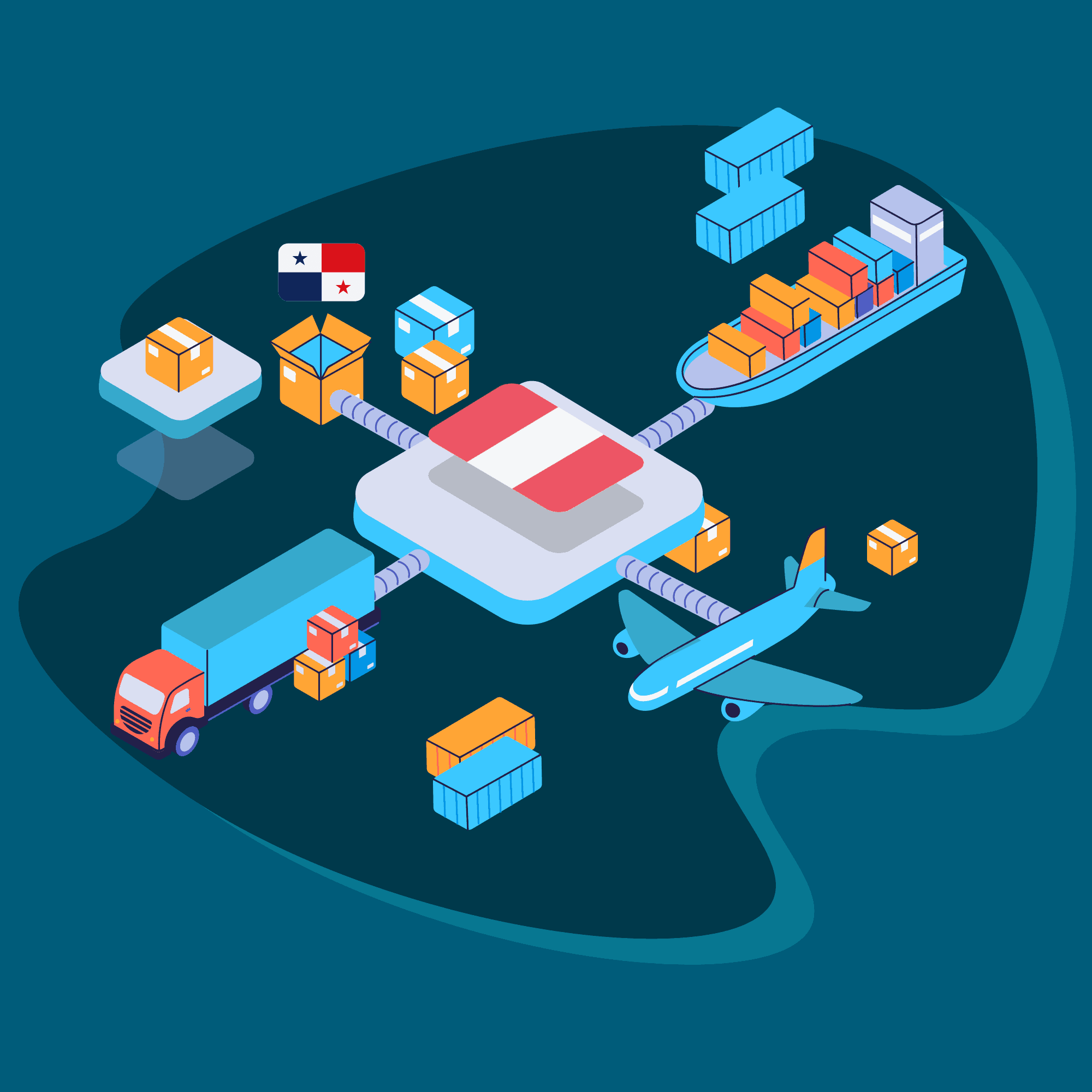
Importar desde la Zona Libre de Colón en Panamá hasta Perú

📦 What Products Can Be Imported from Panama to Peru?

Today, Panama stands as the premier wholesale trading hub in Latin America, celebrated not only for its extensive merchandise selection and globally recognized brands, but also for its rapid dispatch velocity. While distant overseas manufacturing in Asia may offer low base prices, Panama ensures significantly shorter shipping transit times, immediate warehouse inventory, and verified product quality, avoiding the uncertainties and supplier risks common in distant markets.

The leading product lines imported by Peruvian entrepreneurs from the Panama Free Zone include:

  • ✅ Textiles & Apparel
  • ✅ Technology & Electronics
  • ✅ Food & Beverages
  • ✅ Beauty & Perfumes
  • ✅ Footwear
  • ✅ Furniture & Home Goods
  • ✅ Sunglasses & Eyewear
  • ✅ Fashion Jewelry & Accessories

Agriculture

Manufacturing Articles

Musical Instruments

Jewelry & Watches

Medicine

General Merchandise

Office & School

Industrial Products

Security

📄 What Are the Requirements to Import Goods into Peru?

Before beginning the process, you must determine whether you will conduct a Personal Import, submitting documentation directly to the National Superintendency of Customs and Tax Administration of Peru (SUNAT), or appoint a licensed Customs Broker (Agente de Aduana) to represent your company in formal commercial customs clearance procedures (Commercial Import) before Peruvian Customs.

  • National Identity Document (DNI) for individuals
  • Single Taxpayer Registry (RUC) for commercial corporate entities
  • Commercial Invoice or Proof of Purchase
  • Simplified Import Declaration (DSI – Declaración Simplificada de Importación) or Single Customs Declaration (DAM)
  • Sworn Declaration of Value (Declaración Jurada de Valor)
  • Transport Document for the imported goods (Bill of Lading or Air Waybill)
  • Cargo Transport Insurance Policy
  • Certificate of Origin (for preferential tariff treatment under trade agreements)
  • Control Document / Technical inspection clearance (where applicable)
  • Notarized Power of Attorney authorizing the customs broker
  • Specialized ministerial permits for regulated goods (DIGEMID, SENASA, SANIPES, etc., where required)

📁 What Are the Import Tariffs and Taxes in Peru?

Once all required documentation has been compiled, deliver the dossier to your designated customs broker, who will generate the Simplified Import Declaration (DSI) or Customs Goods Declaration (DAM) and calculate the applicable tax liquidation slip.

Payment of customs duties and taxes is then completed through authorized financial institutions approved by SUNAT. Ensure you reference the Customs Document Code (CDA – Código de Documento Aduanero) provided on your customs declaration to identify the transaction.

Key customs duties and taxes to consider when evaluating landed import costs include:

  • Ad Valorem Duties (Arancel Ad Valorem): Calculated as a percentage over the CIF customs value of the merchandise based on the National Tariff Heading (Subpartida Nacional).
  • Price Band System (Sistema de Franja de Precios): Applied to specific agricultural commodities to stabilize import costs within predetermined domestic bands.
  • Selective Consumption Tax (ISC): Levied on designated goods such as alcoholic beverages, tobacco, and high-sugar products.
  • General Sales Tax (IGV – 16%): The national value-added tax applied to the taxable import base.
  • Municipal Promotion Tax (IPM – 2%): Collected alongside the IGV, bringing the combined sales tax rate to 18%.
  • Antidumping and Countervailing Duties: Applied to specific imports in cases of unfair trade practices.
  • IGV Perception Regime (Régimen de Percepción del IGV): An advance tax collection mechanism applied to definitive imports (typically 3.5%, 5%, or 10%).

🏦 Keys to Import Financing in Panama for Peruvian Entrepreneurs and Businesses

For Peruvian commercial buyers placing volume wholesale orders, Free Zone distributors often offer tailored commercial payment terms following a credit risk assessment. Agreed payment windows typically range across 30, 60, or 90 days, with interest structures established according to individual distributor policies.

To protect transactions, distributors implement structured trade credit management and utilize trade credit insurance in partnership with Panamanian financial institutions. Additionally, suppliers incentivize early payment by providing attractive discounts to clients who settle invoices ahead of agreed credit terms.

This supplier financing is widely referred to as «Commercial Credit for Peruvian Businesses.» While common in wholesale commerce, obtaining credit lines requires establishing a proven, reliable commercial track record, meaning initial transactions generally require upfront settlement until business trust is demonstrated.

📦 What Is the Difference Between Sourcing from China vs. Panama to Peru?

Importing products from China versus Panama differs significantly across several key operational dimensions. Choosing the optimal sourcing origin depends on your specific business requirements, turnaround urgency, procurement budget, product diversity, and logistics planning. Ocean freight from China involves extensive geographic transit times averaging 18 to 35 days for containerized shipments, tying up working capital and carrying higher potential shipping and inventory holding costs.

Conversely, importing from Panama offers superior logistical efficiency, with maritime transit taking just 4 to 7 sailing days. Sourcing from Panama eliminates language barriers, facilitates seamless negotiations, and provides direct access to 100% authentic inventory from premier global brands through authorized regional master distributors, backed by trade preferences under the Peru-Panama Free Trade Agreement.

🚢 How Much Does Freight Cost from Panama to Peru?

✅ To determine shipping costs for cargo or parcels from Panama to Peru, prepare your shipment parameters: destination terminal, gross weight, and package dimensions. Next, contact air or maritime freight operators in Panama and search the official Colon Free Zone directory. Sourcing and shipping via Panama guarantees significantly shorter delivery lead times compared to imports routed from the United States or China.

Air cargo flights ✈ from Panama to Peru operate on daily flight schedules, while maritime container services ⛴ depart on regular weekly rotations. Confirm container space allocation and booking availability with your freight carrier in advance.

🚢 Which Commercial Seaports Receive Imports in Peru?

Peruvian seaports play a pivotal role in international trade, serving as vital entry gateways for commercial imports. Port selection depends on the location of your distribution facilities and available carrier routes. Maritime transit from Panamanian terminals to Peruvian ports typically ranges from 4 to 7 sailing days. Major commercial seaports include:

  • Port of Callao: Located adjacent to Lima, this is Peru’s largest and most active seaport, serving as the central gateway for international containerized cargo and commercial trade. Transit time from Panama starts at approximately 4 days, with regular weekly departures.
  • Port of Paita: Located in the Piura region, serving as the primary commercial maritime hub for northern Peru, with direct transit times starting around 7 days.
  • Port of Pisco (Paracas): Situated in the Ica region, functioning as an important deep-water commercial terminal serving central and southern Peru, with transit times starting around 5 days.

🛬 Which Commercial Airports Receive Imports in Peru?

Coordinating with licensed freight forwarders and customs brokers ensures your air cargo clears customs smoothly and complies with all SUNAT regulations. Key commercial international airports in Peru include:

  • Jorge Chávez International Airport (LIM): Located in Callao/Lima, this is the nation’s premier international airport and central air cargo hub, equipped with modern customs clearance facilities and bonded warehouses.
  • Alejandro Velasco Astete International Airport (CUZ): Situated in Cusco, handling air shipments serving southern regional trade and tourism.
  • Rodríguez Ballón International Airport (AQP): Located in Arequipa, facilitating air cargo connections for southern Peru.
  • Capitán FAP Guillermo Concha Iberico International Airport (PIU): Situated in Piura, vital for air freight destined for northern Peru.
  • Coronel FAP Carlos Ciriani Santa Rosa International Airport (TCQ / TAC): Located in Tacna, serving cross-border trade in the extreme south.
  • Alférez FAP David Figueroa Fernandini Airport (HUU): Located in Huánuco, servicing the central highlands.
  • FAP Captain David Abensur Rengifo International Airport (PCL): Located in Pucallpa, accommodating air cargo connections for the Peruvian Amazon basin.

🏨 Where to Stay When Visiting from Peru?

Booking early ensures optimal commercial lodging rates. Below are established hotel choices favored by business buyers visiting our suppliers in the Colon Free Zone. These accommodations offer strategic proximity and direct taxi or shuttle transport into the commercial complex.

You can also check accommodation availability in Panama City and near the Free Zone for your intended dates. Through our arrangement with booking.com, visitors receive special corporate discounts for business stays.

📄 Embassy and Consulate of Peru in Panama

The Embassy and Consular Section of the Republic of Peru in Panama is located at Torre de Las Américas, Tower «C», 15th Floor, Office 1507, Punta Pacífica, Panama City. Contact via telephone at +507 215-3016 / +507 215-3285 / +507 215-3920, for Consular Emergencies at +507 6866-2294, or by email at info@conperpanama.com.

📄 Benefits of the Peru-Panama Free Trade Agreement

The Free Trade Agreement (FTA) between Peru and Panama provides substantial tariff preferences and commercial stability for bilateral merchandise exchange. A central benefit of this treaty is the progressive elimination and reduction of customs duties on originating merchandise. Qualifying Peruvian goods entering Panama and originating Panamanian products entering Peru enjoy significant duty savings under Annex 2.3 of the Tariff Elimination Program, provided consignments comply with rules of origin and are supported by an authentic Certificate of Origin.

💻 Is It Safe to Purchase Online from Peru?

Yes, purchasing online from Panama is secure for Peruvian buyers, provided you connect directly with established companies operating within the Colon Free Zone. You can verify contact details and corporate standing through official Free Zone directories; many suppliers maintain active commercial websites and corporate social channels to address technical questions and confirm trade terms. Both countries share robust diplomatic and economic ties, supporting seamless trade flows.

Once you select your supplier, coordinate international shipping to Peru. For ocean cargo, confirm container space with your forwarder to avoid dispatch delays. Also keep in mind that once shipments reach Peruvian ports, inland customs processing by SUNAT requires several business days. Air freight arrives faster, but is likewise subject to standard clearance. Total shipping costs depend on cargo dimensions, weight, and your chosen logistics mode.